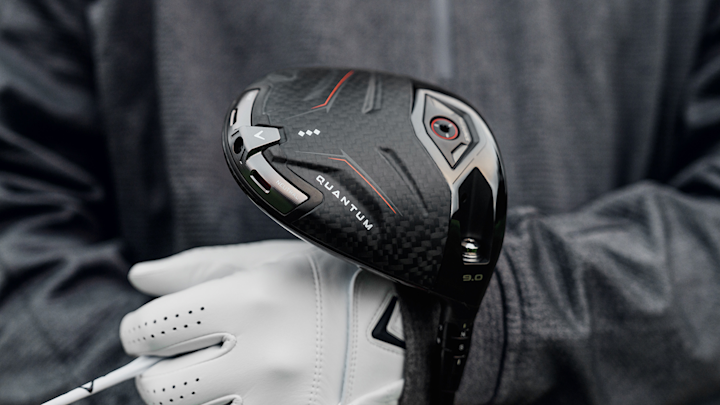
How your dream driver is created
Every year, new and exciting drivers arrive at your Dormy store. What many don’t realise is that it has taken years of development and countless tests before they reach the market. Brian Williams, Head of Product Development at Callaway, gives you a unique insight into how your dream driver is created.
Brian Williams began his journey at Callaway as an engineer back in 2003. Today, 23 years later, he holds the title Vice President, Research & Development. In simple terms: one of the people who knows the very most about the production and technology behind Callaway’s latest clubs.
That also makes him the perfect person to take us behind the scenes and explain how an idea becomes reality – and how a new driver takes shape.
Williams works at Callaway’s R&D department in Carlsbad, Southern California – one of the largest in the industry. It consists of around 200 people, including engineers and specialists who develop prototypes and carry out testing.
Where do you start when designing a new driver?
– When we talk about a new driver, we need a clear objective for what we’re trying to achieve. We’re always chasing higher ball speed. We know it helps golfers hit longer drives and achieve lower scores. That’s been the goal with our new Quantum series. We also know that accuracy matters, and we have exciting AI technology that allows us to build forgiveness into our clubfaces.
How many people were involved in creating this year’s new series?
– We were a team of around 30 people. In addition, we have a data science team driving our AI work. That team is constantly expanding our AI models. They are essentially developing new code so we can process more complex data and create more advanced optimisation processes. We also have a large design team focusing on the creative elements – colours, graphics and how we communicate what the product does.
CALLAWAY WERE EARLY adopters of AI in production. As far back as 15 years ago, the company made its first investment in what they then called a supercomputer – a server built to handle highly complex processes, as the innovation team believed greater computing power would lead to better results.
What have you learned along the way?
– It took us six to seven years to develop the code and build a platform that truly worked. We had to train the platform, define the decisions an engineer would make, and feed in code around aerodynamics, ball flight and launch so we could simulate performance.
The first real results came with the Epic Flash driver, where the main goal was to increase ball speed. With the Mavrik series, Callaway began talking more openly about AI and how it could help shape design and aerodynamics.
How many prototypes are created along the way?
– We use a combination of physical parts and virtual prototypes. The virtual side is essentially our AI process in action. With Quantum, we had nearly 60,000 different virtual prototypes and ran over 2 million impact simulations to understand what happens across different areas of the clubface. That’s a huge amount of data used to predict the best possible outcome.
Once we have a strong idea of the optimal model or design, we produce physical prototypes. Typically, we test 50–60 unique variations over a couple of years before finalising the version that goes to market.
Today, you are heavily regulated by the limitations placed on equipment. How do you work to push those boundaries?
– Our engineering team sees it as a challenge, so they are constantly working with new technologies and concepts to help golfers hit the ball further. This product line is inspired by some of our research areas, particularly within materials and AI, where we hold a leading position.
How do you incorporate feedback from your tour players?
– We have a very strong process where we carry out player testing and listen carefully to feedback along the way. We focus a lot on first impressions. How does it sound? How does it feel? What do you experience? Does anything feel different? Then we refine – and refine again. We always test with players like Jon Rahm, Xander Schauffele, Sam Burns, Akshay Bhatia and Si Woo Kim. We want to make sure they feel comfortable with the new products. As we get closer to final production, around mid-season, it becomes harder to test with them as they’re playing majors and are very focused. So while we still involve them, we also bring in Callaway Next players and elite amateurs.
Is pricing something you consider during development – is there a limit to how high you are willing to go?
– That’s a great question, and yes, it’s definitely something we consider. Our philosophy has always been to create a better product using the materials and technologies required, even if that increases the price. At the same time, we are aware that prices have become very high, and that some players may be discouraged from buying a golf club – whether it’s ours or a competitor’s. The whole industry has moved in that direction. But we use that as a guide to make smart decisions – we won’t launch anything that doesn’t deliver a clear and noticeable improvement.
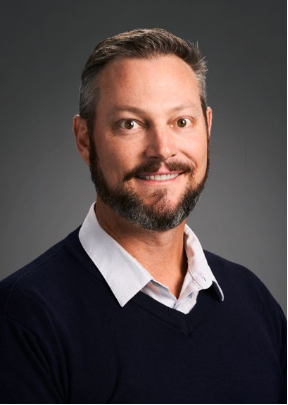
Callaways Brian Williams