Choosing the right lie
Lie is the angle between the shaft and the sole of the clubhead, when the sole is placed flat on the ground. The lie angle affects the direction of the shot and should be adjusted according to body build and swing. If the toe of the clubhead points too much upwards at impact, the club's lie is too upright and the shots tend to go to the left (for a right-handed player). In that case, the lie angle needs to be adjusted to be more flat (-). However, if the toe instead points too much downwards and the shots veer to the right, it might be a good idea to adjust the lie angle to be more upright (+).
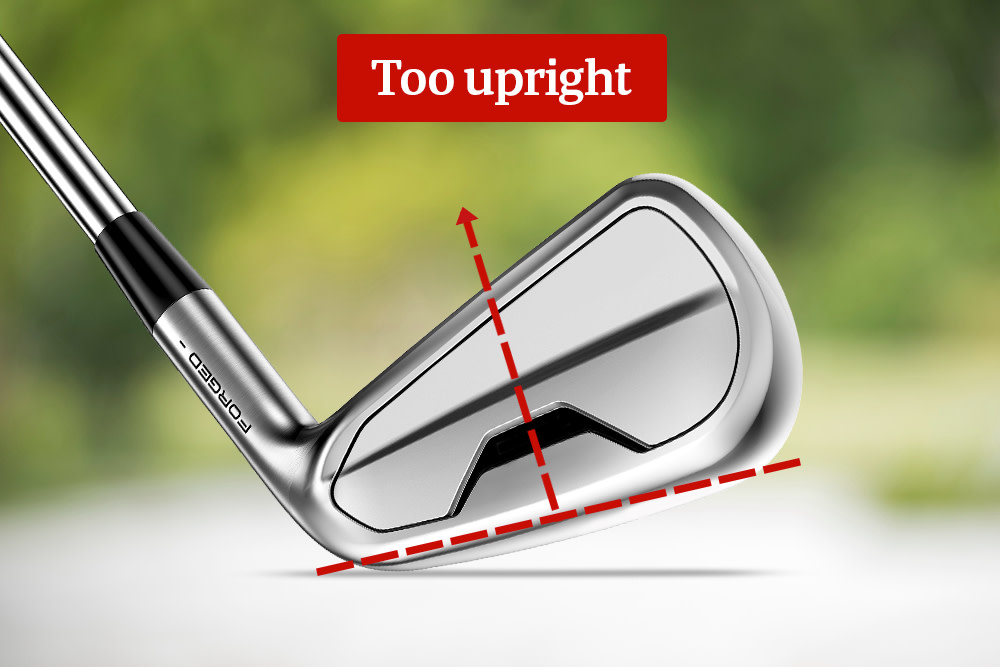
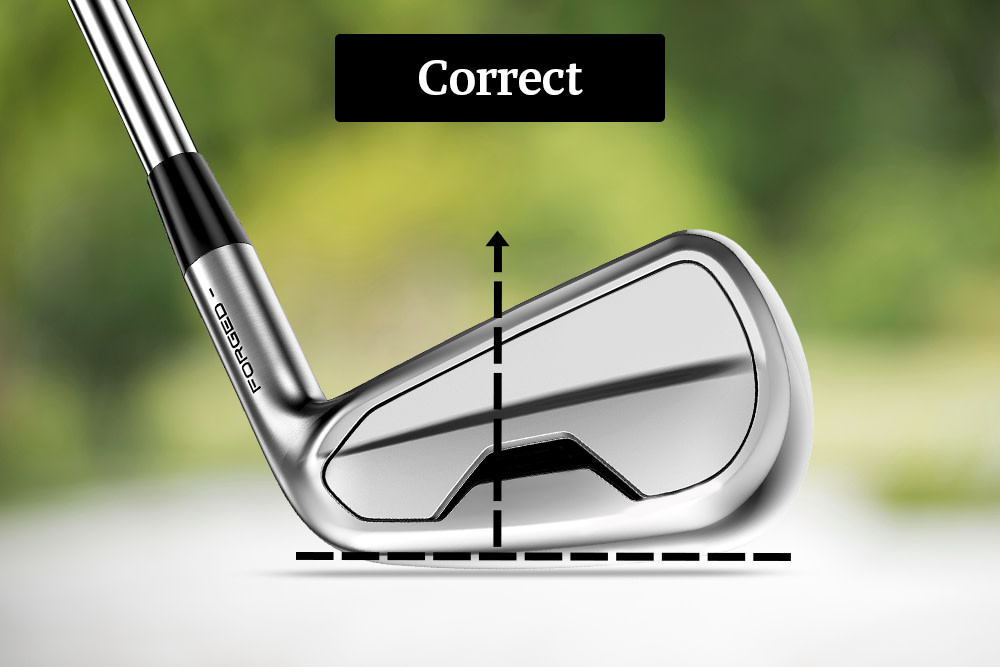
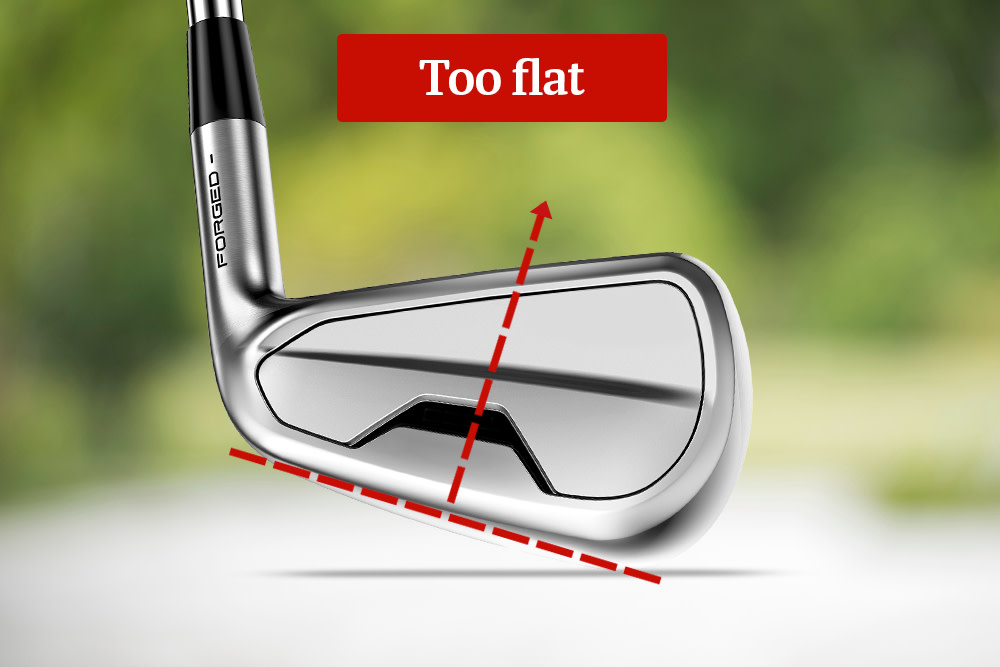
A tip to find out if you have the correct lie angle on your current clubs is to put a piece of masking tape on the underside of the clubhead and hit a few shots. If there is more wear on the tape towards the toe of the clubhead, you have too flat a lie angle. If there is more wear towards the heel, your clubs are too upright. The aim is for the wear to be in the middle.
Adjusting the length of a golf club changes the club's lie angle. If you lengthen a club, it becomes more upright, and if you shorten a club, the lie angle becomes flatter.