Choosing the right shaft
When selecting a shaft, there are several parameters to consider – including stiffness, weight, ball flight, spin, torque, and kick point. To begin with, you can start by considering your own club head speed, which will be a crucial factor in determining the best stiffness for you.
Flex
The image below provides quick guidance on how to think when choosing a shaft for driver and irons.
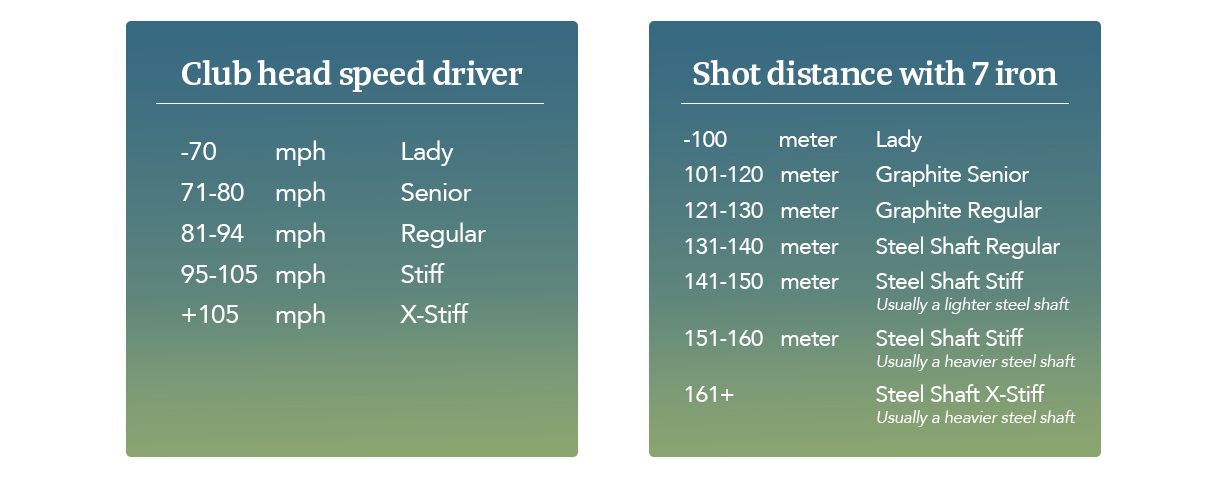
Weight
The weight of the shaft affects how fast you can swing the club. If you wish to increase swing speed and hit further, you should choose a lighter shaft option. If you prefer more control, you should opt for a slightly heavier shaft.
Torque
Torque is a measure of how torsionally stiff the shaft is laterally. A shaft with low torque twists less and feels harder and stiffer than a shaft with high torque.
Kickpoint
The kick point is the point where the shaft bends the most. Kick point is related to ball flight – a low kick point produces a higher ball flight, while a high kick point results in a lower trajectory.
Spin
Many shafts offer the ability to alter and fine-tune the ball flight. The amount of spin generated is an important factor when choosing the right shaft. Players with a fast swing and a naturally high ball flight often benefit from a heavier, low-spin shaft. However, players with a slower swing who want to launch the ball higher should consider a lighter shaft that produces more spin.
Would you like to delve even deeper into shafts? Then we recommend the article Everything You Need to Know About Shafts from Dormy Magazine.