
Wedge Special: The Difference Every Wedge Makes
Do you know how far you hit your wedges? Here's a piece of good advice: find out! Our test shows how the characteristics between different wedge shots vary depending on loft. To make the test as credible as possible, we chose one of Dormy's best golfers, Viktor Nordwall from our customer service department.
There's a 14-degree difference in loft, the bounce varies, as does the sole grind. Yet both a 46-degree and a 60-degree are referred to as wedges. Between the two extremes lies a vast array of clubs, as most established wedge brands offer options in two-degree increments. We wanted to take a closer look at the differences between the various clubs – both in terms of distance, height, and spin.
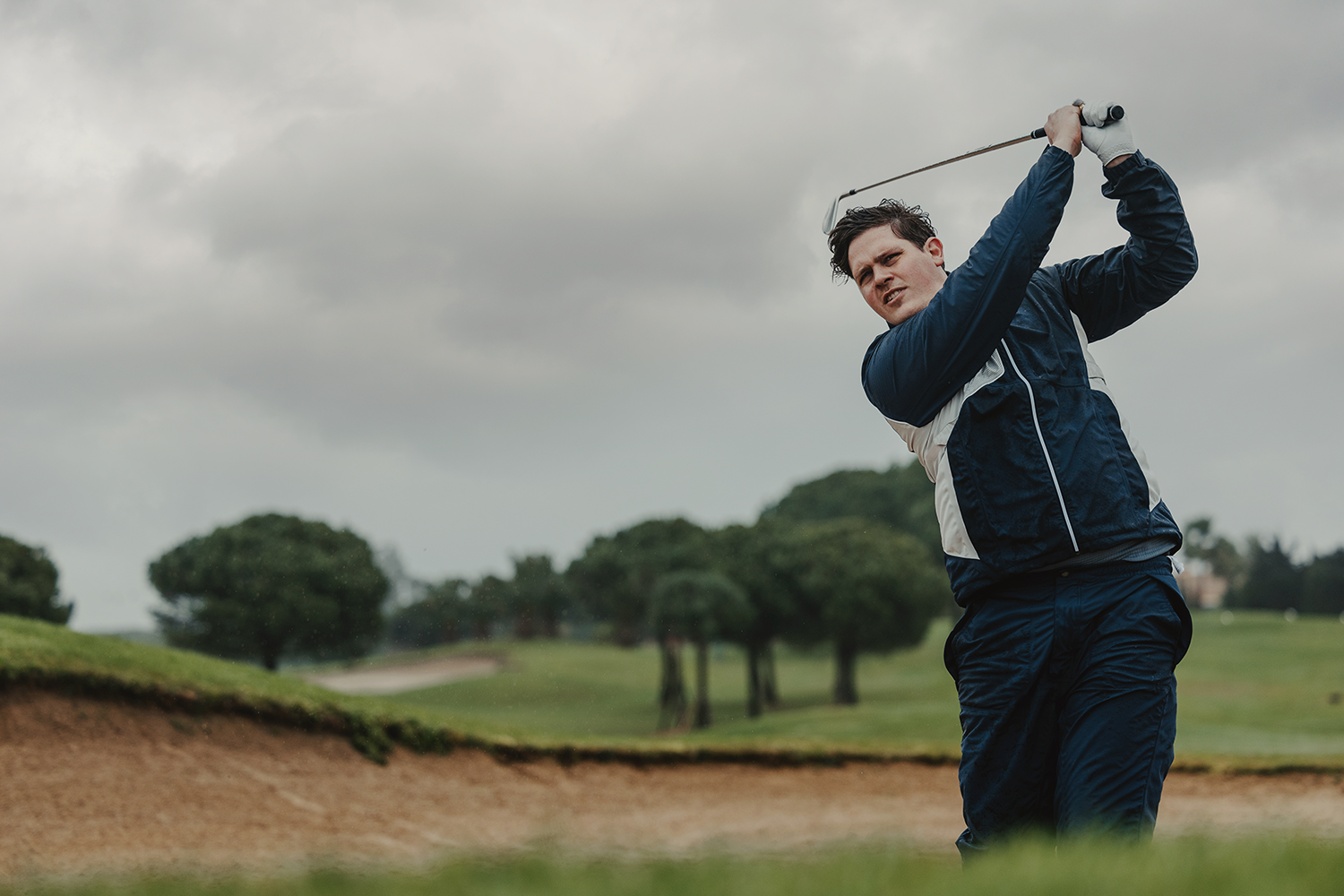
To make the test as credible as possible, we chose one of Dormy's finest golfers, Viktor Nordwall from our customer service team. As well as helping golf-mad customers with his expertise, Viktor has combined that with his own professional ambitions – last season he competed on the Nordic League and Hotelplanner Tour feeder tours, and also made his debut on the DP World Tour.
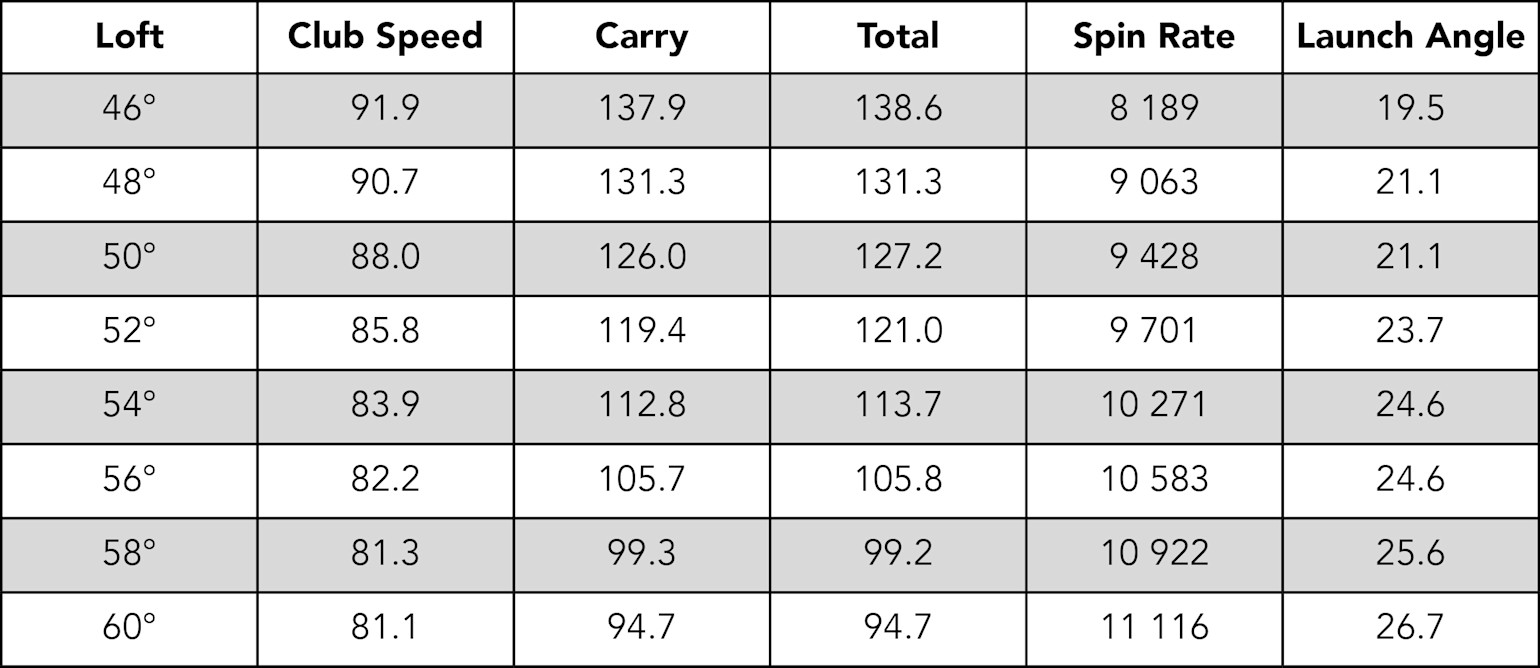
In the test, he hit shots with every loft between 46 and 60 degrees using Titleist's new SM11 wedges. He hit 10 shots with each wedge, and the results shown are the average figures recorded on the market's leading launch monitor, TrackMan 4.
EXPERT JOHAN'S COMMENT:
The first thing to note is that Viktor has a swing speed that is high — more akin to what you see from the professionals on television, rather than what your playing partners back at your home club tend to produce. We can see that, in terms of distance, there is somewhere between 5–7 metres of difference between each wedge. Thanks to his impressive club speed, he generates a high spin rate, which means that the carry and total distance are largely identical — the ball is not rolling out at all, which it will do for players with a lower swing speed.
Looking at the "Launch Angle" column, we can see that the ball's launch angle differs, on average, by roughly one degree per club as well. Height on shots is almost always a good thing, but because wedges have so much loft on the face, it is often a case of keeping the ball flight down rather than helping the ball up — the loft on the club will take care of that for you regardless. This is something that skilled golfers handle well — they tend to favour a flatter ball flight with their wedges for greater control, rather than hitting a high wedge where the ball behaves like a balloon. If you are practising your wedges with a launch monitor to hand, it can be well worth keeping an eye on "Launch Angle" and challenging yourself to hit your wedges lower than before. Your distance control, above all, will improve as a result.
With a lower swing speed than Viktor's, the distance gap between each wedge will be smaller and the spin rate lower. It is high club speed that generates spin. As mentioned, Viktor's wedges are separated by 5–7 metres. For those with a more typical club speed, that gap will be closer to 3–5 metres. For that reason, we recommend having 4–6 degrees of loft between each of your clubs to ensure you can genuinely cover a range of distances.
Taking control of your game and finding out exactly how far each wedge goes for you could well be the key to your next handicap reduction.